Limitations on copyright – when third-party works may be used without a licence
The law permits certain uses of third-party works without the rights holder’s consent, such as quotations, parodies, pastiches or reporting on current events. These exceptions are exhaustively defined and are interpreted narrowly. Anyone who exceeds their limits is liable in the same way as for any other copyright infringement.
Our solicitors and specialist copyright lawyers will assess whether a proposed use is permitted, and will advise and represent you should you receive a cease-and-desist letter regarding such use. On behalf of rights holders, we will assess whether an infringer is justified in invoking a defence.
Inquiry Website
You have further questions about our consulting services? Talk to us or send us an e-mail.
You can also send us a message using the contact form below. If you wish, we can also call you back.
Quotations and visual quotations
A quotation is permitted under § 51 UrhG if the author’s own work engages with the quoted work. The quotation must serve as evidence or the basis for the discussion. A photograph that merely accompanies and illustrates an article does not constitute a quotation. Quotations must include a source reference (§ 63 UrhG) and may only be altered to the extent required by the purpose (§ 62 UrhG).
Parody, caricature and pastiche
§ 51a UrhG permits uses for the purposes of caricature, parody and pastiche. A parody evokes an existing work but is recognisably distinct from it and expresses humour or mockery. A pastiche openly and recognisably draws on other works and engages with them, for example as a homage, imitation or remix.
The legitimate interests of the author must be taken into account in all cases.
News reporting, freedom of panorama and incidental elements
Works that become visible in the course of an event may be used for reporting on current events (§ 50 UrhG). Works that are permanently situated on public paths, roads or squares may be photographed and the photographs disseminated (so-called freedom of panorama, § 59 UrhG). Photographs taken using drones or from private property are generally not covered by this freedom of panorama. Works that appear only as an insignificant incidental element alongside the actual subject of the use are also free (§ 57 UrhG).
Private copying, education, science, and text and data mining
Reproductions for private use are permitted provided that no obviously unlawful source material is used (§ 53 UrhG). Separate exemptions apply to teaching, instruction and research (§§ 60a et seq. UrhG). Private copying and educational exceptions expressly do not cover commercial purposes. The automated analysis of works, for example for the training of AI systems, is permitted under § 44b UrhG, provided that the rights holder has not declared a machine-readable restriction on use (Further information can be found in the ‘AI Law’ section).
Please describe the intended use to us or send us the cease-and-desist letter. Our copyright solicitors will be happy to review the facts of the case for you and draw up a sound strategy.
Your partners
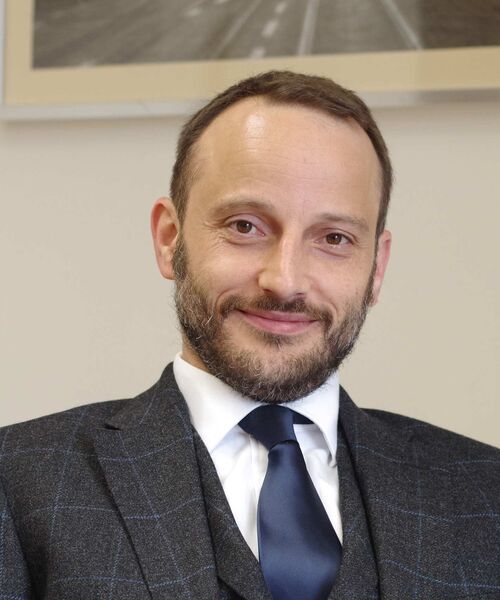
Lawyer Christian Röhl, LL.M.
Certified Intellectual Property Lawyer
Partner

Lawyer Patrick Richnow, LL.M.
Certified Intellectual Property Lawyer
Senior Associate

Lawyer Jan Haßold, LL.M.
Specialized in copyright and media law
Salary Partner
FAQ – Frequently asked questions about the limitations of copyright
Yes, provided your post specifically engages with the image and you cite the source. Quoting an image purely for illustrative purposes is generally not permitted.
No. Citing the source does not replace a licence. However, it is mandatory if an exception permits the use.
A meme may be permitted as a parody or pastiche. However, this depends on the individual case. Where used for commercial purposes by businesses, the balancing of interests with those of the rights holder is significantly stricter.
Yes, provided they are permanently situated there and you take the photographs from a publicly accessible location (§ 59 UrhG). This also applies to the commercial use of the photographs.
To individual people within your close private circle, yes. Publishing them on the internet or selling them is not permitted.
A parody requires a humorous or mocking engagement with the existing work. A pastiche is a broader concept and also encompasses homages, imitations and remixes that openly draw on other people’s works.