Rights clearance and rights management – securing rights in good time before disputes arise
Many copyright disputes arise because it was not clarified prior to publication who is entitled to which rights. Any gap in the rights chain can later lead to warning letters, additional claims or the halting of a campaign or project.
Our solicitors and specialist copyright lawyers clarify rights prior to publication and transactions and support rights holders in managing and exploiting their works.
Inquiry Website
You have further questions about our consulting services? Talk to us or send us an e-mail.
You can also send us a message using the contact form below. If you wish, we can also call you back.
Clarifying rights prior to publication and campaigns
Before a campaign, a production, a book or a website launch, we check whether the rights to all texts, photographs, pieces of music, fonts, videos and designs used are in place in the required form. This includes neighbouring rights, such as those relating to sound recordings, and the right to one’s own image for persons depicted. We obtain any missing rights or suggest alternatives.
Rights chains in company acquisitions and financing
In the context of company acquisitions, equity investments and financing, software, content and designs are often the most valuable assets. As part of a due diligence process, our copyright lawyers examine whether the target company actually holds the rights to its works, whether licences are transferable and whether there is a risk of claims from copyright holders.
Collecting Societies
Many rights are managed collectively, for example by GEMA for music, VG Wort for texts and VG Bild-Kunst for images. We advise authors on entering into management agreements. We explain to users which rights they can obtain through a collecting society and which they must obtain directly from the rights holder.
Collections, archives and estates
Photographers, artists, publishers and heirs often possess large collections of works whose legal status has been poorly documented, if at all, over the years. We identify rights and existing licences, fill in the gaps and develop a structure for their future exploitation. We take action against any unauthorised use that comes to light in the process.
Please describe your project or your collection of works to our copyright lawyers. Together, we will develop a workable structure for the exploitation of your rights.
Your partners
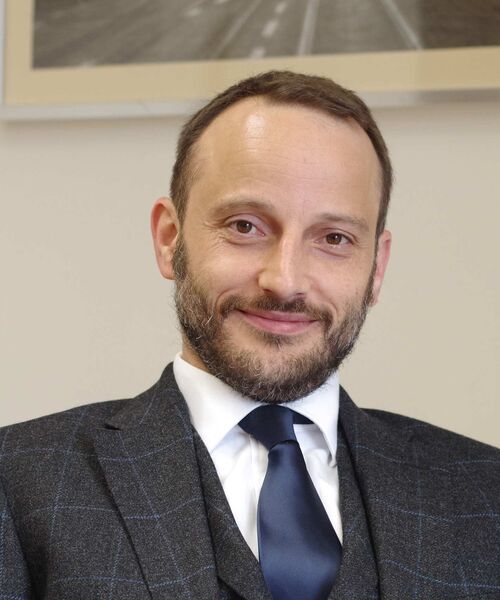
Lawyer Christian Röhl, LL.M.
Certified Intellectual Property Lawyer
Partner

Lawyer Patrick Richnow, LL.M.
Certified Intellectual Property Lawyer
Senior Associate

Lawyer Jan Haßold, LL.M.
Specialized in copyright and media law
Salary Partner
FAQ – Frequently Asked Questions about Rights Clearance
Rights clearance involves checking whether the necessary usage rights are in place for every work used, and obtaining any missing rights prior to publication.
A rights chain is the unbroken sequence of contracts from the copyright holder to the user. If a link is missing, the user cannot have acquired the rights, even if they have paid in good faith.
The party that publishes the work is liable to the rights holder. The relevant agency contract should expressly stipulate who is responsible for clearing the rights internally.
No. GEMA administers the rights of composers, lyricists and music publishers in relation to musical works, for example regarding performance, broadcast and reproduction. It does not grant the right to combine music with images for advertising purposes (synchronisation or film production rights). The consent of the music publisher or the author is required for this. The rights to the specific recording lie with the record label and are licensed separately.
As a rule, yes. In addition to the photographer’s licence, the consent of the persons depicted is required (§ 22 of the German Artistic Copyright Act (KUG)), particularly for commercial use, e.g. in advertising.
The heirs. The author may also, by will, transfer the exercise of copyright to an executor (§ 28(2) UrhG).